A Florida family is preparing for their son Cassian’s first birthday after a groundbreaking surgery allowed him to be born twice and saved his life. Cassian’s parents, Keishera and Greg Jouvert, learned in January 2025 that their 2-year-old son Mattias would soon be a big brother.“We were very joyful. We were very happy. We found that he was a boy!” Keishera Jouvert said. At 19 weeks into the pregnancy, doctors discovered Cassian had congenital high airway obstruction syndrome, a rare condition in which a thick membrane blocks the airway.“Your son is very special. This case is barely in any textbooks, and I have personally never seen it in my career,” Keishera Jouvert recalled being told by doctors. CHAOS affects 1 in every 50,000 to 100,000 births and is often fatal.“A lot of the articles would say that it’s devastatingly fatal. A lot of the babies die in the womb or shortly after birth, and I immediately just closed my laptop, and I went straight into the bedroom, into a corner, just started crying,” Keishera Jouvert said. Only 3 survivorsDetermined to save their child, the Jouverts met with Dr. Emanuel Vlastos at Winnie Palmer Hospital within a week.In his 42-year career, Vlastos had seen a dozen CHAOS cases, with only three survivors.“Those are all cases from the past when we talk about the cases we know. We don’t know about the case present, and perhaps that’s where hope floats us down the stream of life,” Vlastos said. At 22 weeks pregnant, Keishera Jouvert underwent laparoscopic surgery to cut through the membrane blocking Cassian’s airway. However, the membrane proved too thick, leaving the family at a loss. “We’re not even at square one; we’re a step behind square one,” Keishera Jouvert said. Vlastos then proposed a groundbreaking procedure: delivering the baby partially via cesarean section, with only the head and arms outside the womb while the rest of the body remains connected to the placenta. This would allow an ear, nose and throat specialist to perform a tracheostomy to create an airway. At 25 weeks, the surgery was successfully performed.“Dr. Vlastos comes in, and he’s like, ‘Your baby did great during surgery,’” Keishera Jouvert said. She recalled jokingly telling the doctor, “I am a little bit jealous. You got to see my baby before me.” Dr. Vlastos showed her a photo of Cassian during the surgery, allowing her to see her baby’s face and the tracheal stent for the first time. “I got to see what my little baby looked like at 25 weeks. I got to see his little mouth, his eyes and his eyebrows, and then the little tracheal stent that was in it. And it was just so beautiful and amazingly unique,” she said. Final surgeryCassian’s third and final surgery came at 31 weeks when Keishera Jouvert’s water broke. More than 30 nurses and doctors mobilized to replace Cassian’s tracheostomy tube with one that would serve him outside the womb. A ventilator and feeding tube replaced the placenta’s functions. Cassian is now home, though he faces at least three more surgeries before he turns 2 to address the thick membrane keeping him on a ventilator.“Some days it does feel like we’re waiting for the other shoe to drop. Some days, it does feel like, OK, we’ve gotten this far, but what’s next? What’s coming on the horizon? Because, you know, every day is different. You know, Cassian is like a box of chocolates. You never know what you’re going to get,” Keishera Jouvert said. Greg Jouvert added, “We’re not through it yet, but honestly, aren’t we all, like, in need of a good story?” Vlastos credited the parents’ advocacy for making the groundbreaking surgery possible, saying he leaned on colleagues worldwide to develop the procedure.He plans to present the results at an international medical conference in Japan this October.
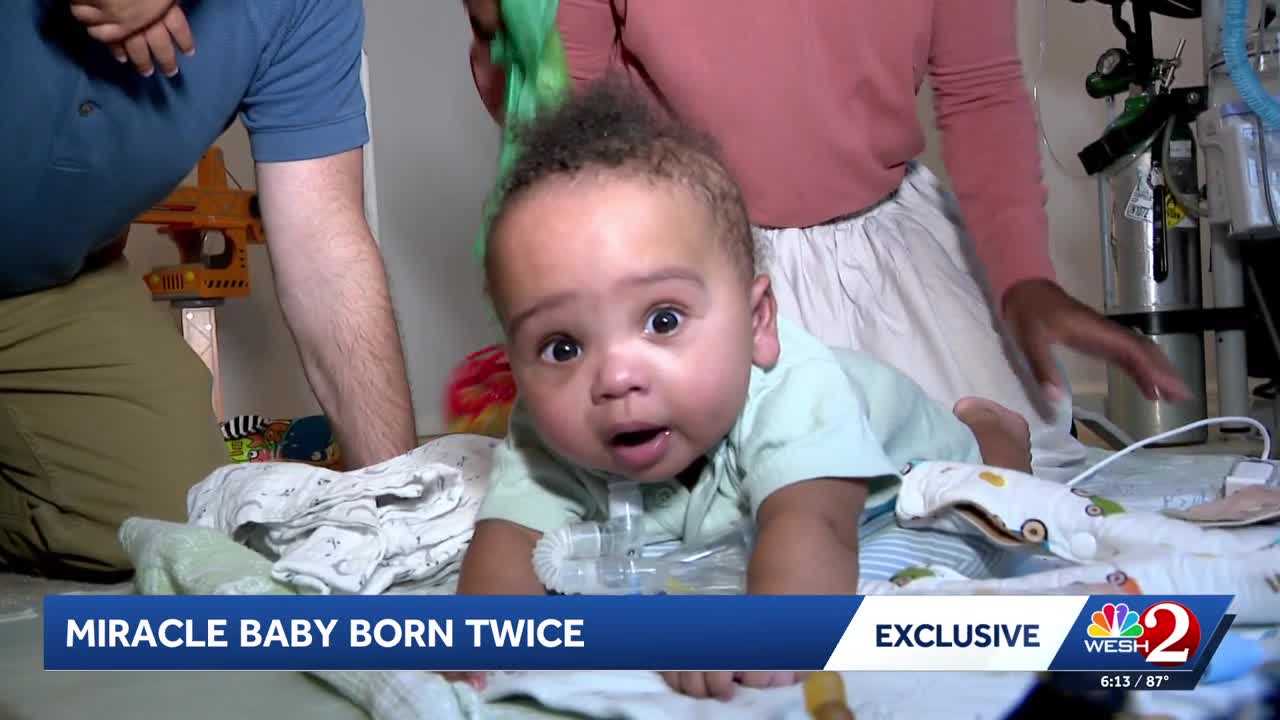
A Florida family is preparing for their son Cassian’s first birthday after a groundbreaking surgery allowed him to be born twice and saved his life.
Cassian’s parents, Keishera and Greg Jouvert, learned in January 2025 that their 2-year-old son Mattias would soon be a big brother.
“We were very joyful. We were very happy. We found that he was a boy!” Keishera Jouvert said.
At 19 weeks into the pregnancy, doctors discovered Cassian had congenital high airway obstruction syndrome, a rare condition in which a thick membrane blocks the airway.
“Your son is very special. This case is barely in any textbooks, and I have personally never seen it in my career,” Keishera Jouvert recalled being told by doctors.
CHAOS affects 1 in every 50,000 to 100,000 births and is often fatal.
“A lot of the articles would say that it’s devastatingly fatal. A lot of the babies die in the womb or shortly after birth, and I immediately just closed my laptop, and I went straight into the bedroom, into a corner, just started crying,” Keishera Jouvert said.
Only 3 survivors
Determined to save their child, the Jouverts met with Dr. Emanuel Vlastos at Winnie Palmer Hospital within a week.
In his 42-year career, Vlastos had seen a dozen CHAOS cases, with only three survivors.
“Those are all cases from the past when we talk about the cases we know. We don’t know about the case present, and perhaps that’s where hope floats us down the stream of life,” Vlastos said.
At 22 weeks pregnant, Keishera Jouvert underwent laparoscopic surgery to cut through the membrane blocking Cassian’s airway. However, the membrane proved too thick, leaving the family at a loss. “We’re not even at square one; we’re a step behind square one,” Keishera Jouvert said.
Vlastos then proposed a groundbreaking procedure: delivering the baby partially via cesarean section, with only the head and arms outside the womb while the rest of the body remains connected to the placenta. This would allow an ear, nose and throat specialist to perform a tracheostomy to create an airway.
At 25 weeks, the surgery was successfully performed.
“Dr. Vlastos comes in, and he’s like, ‘Your baby did great during surgery,’” Keishera Jouvert said.
She recalled jokingly telling the doctor, “I am a little bit jealous. You got to see my baby before me.” Dr. Vlastos showed her a photo of Cassian during the surgery, allowing her to see her baby’s face and the tracheal stent for the first time. “I got to see what my little baby looked like at 25 weeks. I got to see his little mouth, his eyes and his eyebrows, and then the little tracheal stent that was in it. And it was just so beautiful and amazingly unique,” she said.
Final surgery
Cassian’s third and final surgery came at 31 weeks when Keishera Jouvert’s water broke. More than 30 nurses and doctors mobilized to replace Cassian’s tracheostomy tube with one that would serve him outside the womb. A ventilator and feeding tube replaced the placenta’s functions.
Cassian is now home, though he faces at least three more surgeries before he turns 2 to address the thick membrane keeping him on a ventilator.
“Some days it does feel like we’re waiting for the other shoe to drop. Some days, it does feel like, OK, we’ve gotten this far, but what’s next? What’s coming on the horizon? Because, you know, every day is different. You know, Cassian is like a box of chocolates. You never know what you’re going to get,” Keishera Jouvert said.
Greg Jouvert added, “We’re not through it yet, but honestly, aren’t we all, like, in need of a good story?”
Vlastos credited the parents’ advocacy for making the groundbreaking surgery possible, saying he leaned on colleagues worldwide to develop the procedure.
He plans to present the results at an international medical conference in Japan this October.

