A marketing forecast estimates future marketing results, such as leads, pipeline, and revenue, using historical data and conversion assumptions. Marketing forecasting connects planned activity to expected outcomes, helping teams understand what performance is likely to look like before campaigns are executed. This approach supports clearer planning, more predictable growth, and stronger alignment between marketing inputs and revenue targets.![Download Now: Free Marketing Plan Template [Get Your Copy]](https://no-cache.hubspot.com/cta/default/53/aacfe6c7-71e6-4f49-979f-76099062afa0.png)
Growth-focused teams operate in an environment shaped by AI-driven discovery, fragmented data systems, and increasing pressure to prove impact across the funnel. Marketing forecasts provide a structured way to navigate this complexity by translating data into forward-looking decisions.
This article explains how marketing forecasting works, the methods used to build accurate models, and the factors that improve reliability over time, enabling more consistent and measurable outcomes.
Table of Contents
What is a marketing forecast?
A marketing forecast is a structured estimate of future marketing performance based on historical data, conversion rates, and planned activities. It projects expected outcomes such as leads, pipeline, and revenue across a defined period. A marketing forecast estimates future results and informs planning decisions across marketing and revenue teams.
Marketing forecasting relies on historical data to establish performance baselines and expected ranges, often drawing on approaches such as trend forecasting and qualitative forecasting to shape assumptions. It differs from reporting and budgeting in both purpose and timing:
- Marketing forecasting predicts future outcomes.
- Reporting analyzes past performance.
- Budgeting allocates future spend.
Forecast models translate inputs such as traffic, spend, and conversion rates into projected pipeline and revenue. These projections guide quarterly planning, scenario evaluation, and target setting across growth teams.
Why does a marketing forecast matter for growth teams?
A marketing forecast links planned activities to expected revenue outcomes and provides structure for planning decisions. Forecast outputs guide how the budget is allocated, how teams are resourced, and which campaigns receive priority. A marketing forecast aligns marketing efforts with pipeline goals and clarifies expected contribution to revenue.
Budget decisions are becoming more constrained and more strategic. According to HubSpot’s State of Marketing 2026 Report, 73% of marketers report increased budget scrutiny, while 93% expect budgets to remain stable or grow. Forecast models clarify expected return and help teams direct investment toward channels that generate pipeline.
Growth teams use forecasts to guide:
- Budget planning allocates spend across channels based on expected return.
- Resource allocation informs hiring and team capacity decisions.
- Revenue alignment connects marketing outputs to pipeline and revenue goals.
- Campaign prioritization focuses investment on high-impact programs.
Forecast outputs map directly to core performance metrics. Marketers prioritize lead quality, conversion rates, and return on investment (ROI) as primary KPIs, which align with projected pipeline and revenue outcomes.
This is where modern approaches like Loop Marketing become increasingly relevant. Loop Marketing focuses on continuously feeding performance data, customer insights, and campaign outcomes back into planning and execution. Instead of treating campaigns as linear inputs, Loop Marketing creates a closed system where insights improve future performance — making forecast models more responsive and aligned with real buyer behavior.
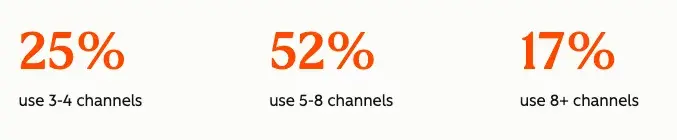
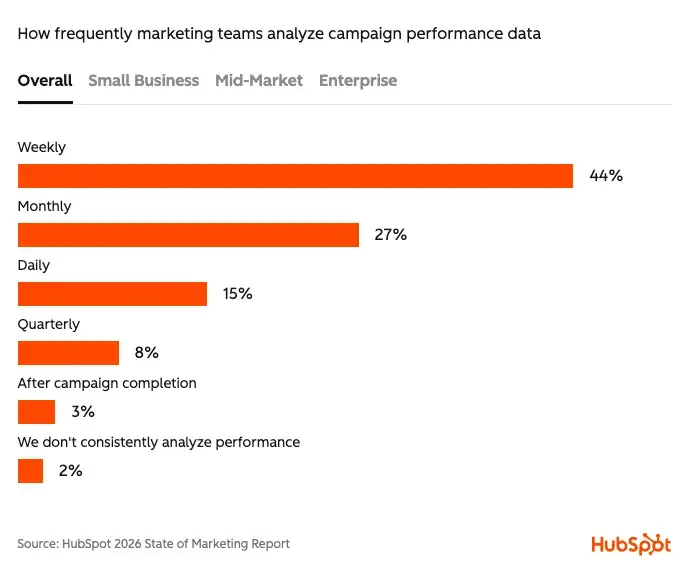
Of marketers, 75% now operate across five or more channels, and 73% review campaign performance at least weekly. Forecast models must account for both channel complexity and continuous performance updates to remain accurate.
Marketing Forecast vs. Sales Forecast: What is the difference?
A marketing forecast predicts pipeline creation, while a sales forecast predicts revenue closure. Marketing forecasting uses inputs such as traffic, leads, and conversion rates to estimate the future pipeline. Sales forecasting relies on opportunities, deal stages, and close probabilities to estimate revenue outcomes.
These models operate at different stages of the funnel. Marketing forecasting focuses on demand generation and pipeline volume, while sales forecasting focuses on conversion and revenue realization.
Misalignment between these models creates planning gaps. A marketing forecast may project strong pipeline growth based on lead volume, while a sales forecast may reflect lower expected revenue due to deal velocity or close rates. This gap can lead to missed targets and inefficient resource allocation.
What components are required for an accurate marketing forecast?
A reliable marketing forecast requires six core components: historical data, conversion rates, channel mix, market inputs, pipeline definitions, and unified data systems. Each component shapes how projections are calculated and how closely forecasts reflect actual performance.
Historical Performance Data
Historical performance data provides baseline metrics for forecasting models. It includes traffic, leads, and conversion rates across channels and time periods. These inputs establish expected ranges and trend patterns, often informed by approaches like trend forecasting.
- Traffic
- Leads
- Conversion rates
Pro tip: Use 12–24 months of data to account for seasonality and reduce volatility in projections.
Conversion Rate Assumptions
Conversion rate assumptions define how prospects move through the funnel. These assumptions determine how traffic becomes leads and how leads become pipeline and revenue. Forecast reliability depends on how closely modeled conversion rates match actual behavior.
Conversion assumptions must reflect personalization and audience targeting. According to HubSpot’s research, 93% of marketers report that personalization improves lead or purchase conversion rates, which directly influences stage-to-stage conversion rates in forecast models.
Stable conversion assumptions reduce projection error. Shifts in targeting, messaging, or channel mix introduce variability that should be reflected in updated models.
Channel Mix and Spend
Channel mix defines how the budget is distributed across acquisition sources such as paid media, organic search, and email. Digital marketing forecasting models performance at the channel level to estimate the contribution to leads and pipeline. Changes in channel mix directly influence forecast outputs and expected return.
Market and External Inputs
Market inputs account for external factors that influence marketing performance. These factors include seasonality, demand shifts, and competitive activity. Marketing forecasting adjusts projections based on these inputs to reflect current conditions and reduce variance between expected and actual results.
Pipeline Definitions
Pipeline definitions standardize how marketing contributes to revenue across funnel stages. These definitions include lead qualification criteria, stage progression, and attribution models. Clear definitions improve forecast consistency and reduce discrepancies between marketing and sales reporting.
Unified Data Systems
Unified data systems bring marketing and sales activity into a single, consistent dataset. Fragmented systems introduce variance into forecasts. Disconnected tools often report conflicting metrics, which distorts conversion rates and pipeline estimates. A unified system creates a stable foundation for modeling, where inputs remain consistent across teams and reporting cycles.
HubSpot Smart CRM centralizes customer data across touchpoints, making it easier to track how leads convert into pipeline and revenue. HubSpot Smart CRM also strengthens forecasting by providing a unified, real-time dataset across marketing, sales, and service. By consolidating customer interactions and pipeline activity in one system, teams can build forecasts on consistent inputs and reduce discrepancies caused by fragmented tools.
Forecast reliability increases when data sources remain aligned. Consistent datasets produce more stable projections and reduce the gap between expected and actual performance.
Example: Simple Marketing Forecast Model
A basic model translates inputs into projected outcomes using funnel math.
Inputs:
- 50,000 monthly visitors
- 2% visitor-to-lead conversion rate
- 20% lead-to-opportunity rate
- 25% close rate
Projected outputs:
- 1,000 leads
- 200 opportunities
- 50 customers
Small changes in conversion rates can significantly shift results. Increasing the visitor-to-lead rate from 2% to 2.5% raises lead volume to 1,250, which increases the downstream pipeline without additional traffic.
What are the main marketing forecasting methods?
Marketing forecasting methods vary based on data maturity and business complexity. The most common approaches include historical trend, funnel-based, regression-based, and scenario-based forecasting. Each method uses a different model to translate inputs into projected outcomes.
Historical Trend Forecasting
Historical trend forecasting projects future results based on past performance patterns, such as growth rates and seasonality. This approach works well when performance remains stable over time.
What I like: Straightforward modeling with minimal setup.
Best for: Organizations with predictable demand patterns.
Funnel-based Forecasting
Funnel-based forecasting calculates outputs using stage-by-stage conversion rates. It maps how traffic becomes leads, how leads become opportunities, and how opportunities contribute to the pipeline.
What I like: Clear visibility into where performance changes impact the pipeline.
Best for: Teams focused on improving conversion and pipeline generation.
Regression-based Forecasting
Regression-based forecasting applies statistical models to identify relationships between inputs, such as spend, and output metrics such as leads or pipeline. This method captures patterns that are not immediately visible in simpler models and is often used alongside techniques like regression analysis to forecast sales.
What I like: More precise modeling when sufficient data exists.
Best for: Organizations with large datasets and analytical resources.
AI-powered tools such as Breeze AI enhance regression-based forecasting by analyzing large datasets, identifying hidden relationships between variables, and generating predictive insights faster than manual models. Breeze can surface patterns across CRM data, campaign performance, and customer behavior to improve forecast precision and adaptability.
Scenario-based Forecasting
Scenario-based forecasting models multiple potential outcomes based on different assumptions. It accounts for variability in performance, spend, and market conditions.
What I like: Flexibility to plan across multiple possible outcomes.
Best for: Teams operating in uncertain or rapidly changing environments.
Comparison of Marketing Forecasting Methods
Each marketing forecasting method serves a different purpose depending on available data and business context. Teams often combine multiple methods to improve accuracy and create more resilient forecasts.
How do you build a marketing forecast step by step?
Building a marketing forecast requires defining goals, collecting data, mapping the funnel, selecting methods, modeling outputs, and refining assumptions over time. A structured process creates consistency across planning cycles and improves how projections are used in decision-making.
Step 1: Define forecast goals.
Define measurable outputs, such as leads, pipeline, or revenue, before selecting inputs or methods. A marketing forecast works best when the target outcome is clear from the start. Forecast goals shape the time horizon, the metrics included, and the level of detail required.
Step 2: Gather historical data.
Collect data from CRM, analytics, and campaign tools to establish a reliable baseline. Historical data should reflect performance across channels, campaigns, and funnel stages. Marketing forecasting uses past performance to estimate future outcomes, so data completeness and consistency matter at this stage.
Step 3: Map the funnel.
Define funnel stages and conversion rates so the forecast reflects how demand moves toward revenue. Funnel mapping should include stage definitions, progression rates, and any qualification thresholds that affect volume. This step creates the logic that connects top-of-funnel activity to pipeline and revenue.
Step 4: Select forecasting method.
Choose a forecasting method based on data maturity, business complexity, and the required level of precision. Historical, funnel-based, regression, and scenario-based methods each support different planning needs. The right method depends on how much data is available and how stable performance patterns are.
Step 5: Model outputs.
Calculate projected leads, pipeline, and revenue using the selected method and current assumptions. This model should show how inputs such as traffic, spend, and conversion rates influence expected outcomes. Marketing forecast models estimate future results and make performance assumptions visible.
Tools like HubSpot Marketing Hub help operationalize these models by connecting forecast assumptions directly to campaign execution. Marketing automation ensures that nurture flows, email sequences, and campaign triggers align with projected conversion paths, reducing the gap between planned and actual performance.
Step 6: Validate and iterate.
Compare forecast projections with actual results and adjust assumptions based on observed performance. This step focuses on identifying where projections diverge from outcomes and recalibrating the model.
Pro tip: Update forecasts monthly to reflect changes in performance, channel mix, and market conditions.
How can you improve marketing forecast accuracy?
Marketing forecast accuracy increases when inputs remain consistent, definitions stay standardized, and projections are reviewed against actual performance. Lower variance comes from stable inputs, clear assumptions, and regular validation.
Use unified CRM data.
Unified CRM data provides a consistent view of the funnel. HubSpot Smart CRM connects marketing and sales activities into one system, allowing teams to track how leads progress through the pipeline and into revenue.
When systems remain disconnected, projections drift. Consistent inputs reduce projection error and make forecast outputs more stable over time.
Standardize definitions.
Clear definitions for leads, stages, and attribution models prevent inconsistencies across teams. Stable definitions create a shared understanding of how performance is measured, leading to more reliable projections.
Build feedback loops.
Feedback loops compare projected outcomes with actual results to identify gaps in assumptions. This process focuses on reviewing forecast performance and adjusting conversion rates, channel expectations, or pipeline assumptions.
According to HubSpot’s research, 73% of marketing teams analyze campaign performance at least weekly, and 59% review performance daily or weekly. Regular evaluation allows teams to refine projections based on observed results rather than relying on static assumptions.
This concept closely aligns with Loop Marketing, which formalizes feedback loops across the entire customer journey. Loop Marketing connects campaign performance, CRM data, and customer interactions into a continuous cycle of learning and optimization. By embedding these loops into forecasting processes, teams can update assumptions in near real time and reduce the gap between projected and actual outcomes.
Incorporate real-time data.
Real-time data updates forecast inputs as campaign performance shifts. This approach focuses on adjusting models as conditions change, rather than waiting for periodic reviews.
Shorter data cycles allow projections to reflect current conversion rates, spend efficiency, and channel performance. More responsive inputs lead to more stable outputs over time.
Automate forecasting workflows.
Automation keeps execution aligned with forecast assumptions. Automation reduces manual updates and keeps workflows consistent with current projections. This alignment helps maintain continuity between planning and execution. HubSpot marketing automation connects projections to campaign delivery, including email sequences, nurture programs, and drip campaigns.
How Digital Marketing Forecasting Applies Across Channels
Digital marketing forecasting models perform at the channel level to estimate contributions to leads and pipeline. Channel-level projections translate spend, traffic, and engagement into expected outcomes.
Channel complexity continues to increase. According to HubSpot’s research, 75% of marketers use five or more channels, while only a small percentage rely on one or two. More channels introduce variability, which requires more granular forecasting models.
Traffic quality is also shifting. More than half (58%) of marketers report that AI referral traffic has higher intent than traditional search. Higher-intent traffic influences conversion rates and changes projected pipeline outcomes.
These different channels focus their forecasting on different aspects:
- Paid media forecasting estimates leads based on spend, CPC, and conversion rates.
- SEO forecasting projects traffic growth based on rankings and search volume.
- Email forecasting models engagement and conversion based on audience size and send frequency.
Channel-level forecasting highlights which sources generate the most efficient pipeline and where incremental investment produces measurable impact.
How HubSpot Enables Marketing Forecasting at Scale
HubSpot enables marketing forecasting by unifying data, automating workflows, and applying AI-driven insights across the full funnel. HubSpot Smart CRM, HubSpot marketing automation, and Breeze AI support marketing forecasting from data collection to execution and optimization. This connected system improves forecast accuracy and helps teams act on projections with greater consistency.
HubSpot Smart CRM
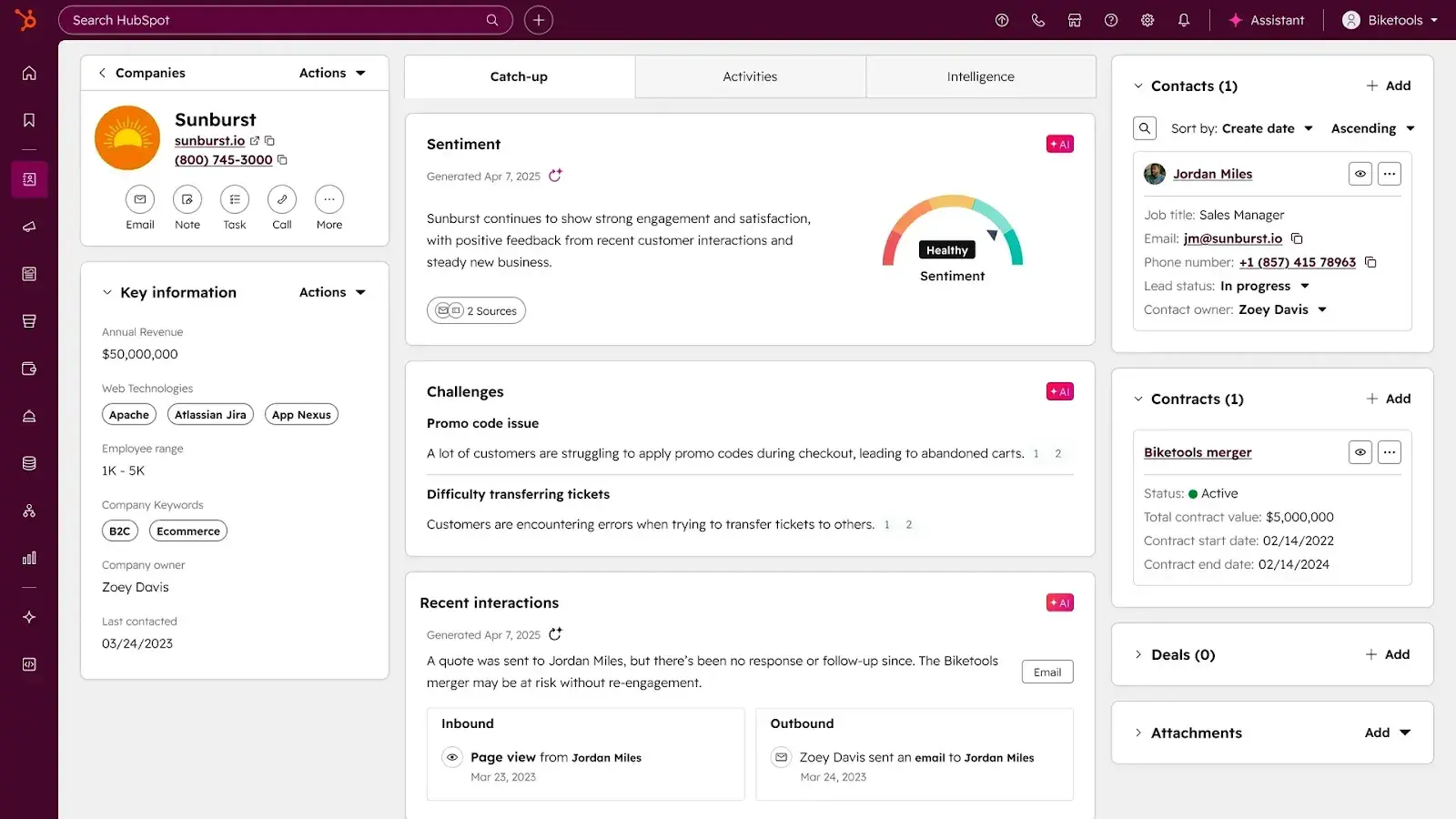
HubSpot Smart CRM enables operationalizing and automating marketing forecasts. It centralizes customer data and pipeline visibility, improving forecast accuracy. The platform connects marketing and sales activities into a single system, allowing teams to track how inputs, such as traffic and leads, translate into pipeline and revenue. HubSpot Smart CRM centralizes customer data, strengthening forecasting models and reducing discrepancies across teams.
Unified visibility across the funnel improves how assumptions are built and validated. Consistent data inputs support more reliable marketing forecasting over time.
HubSpot Marketing Automation
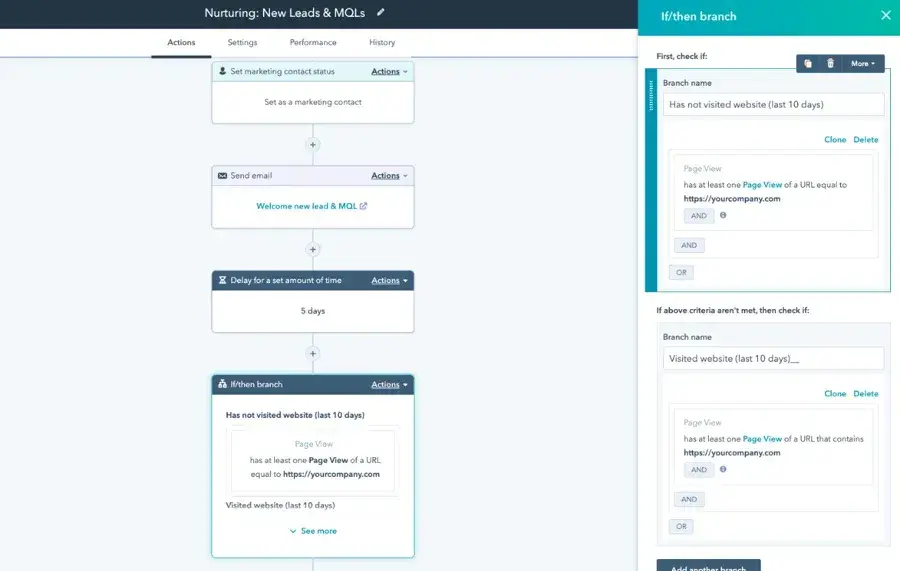
HubSpot Marketing Hub features marketing automation that executes campaigns and workflows aligned with forecast assumptions. The platform connects forecasting inputs to real campaign activity, including email sequences, nurture programs, and drip campaigns. HubSpot marketing automation executes workflows based on defined triggers, helping teams maintain alignment between planned outcomes and execution.
Automation reduces manual effort and ensures that campaigns reflect current forecasting models. This connection between planning and execution improves consistency across marketing operations.
HubSpot Breeze AI
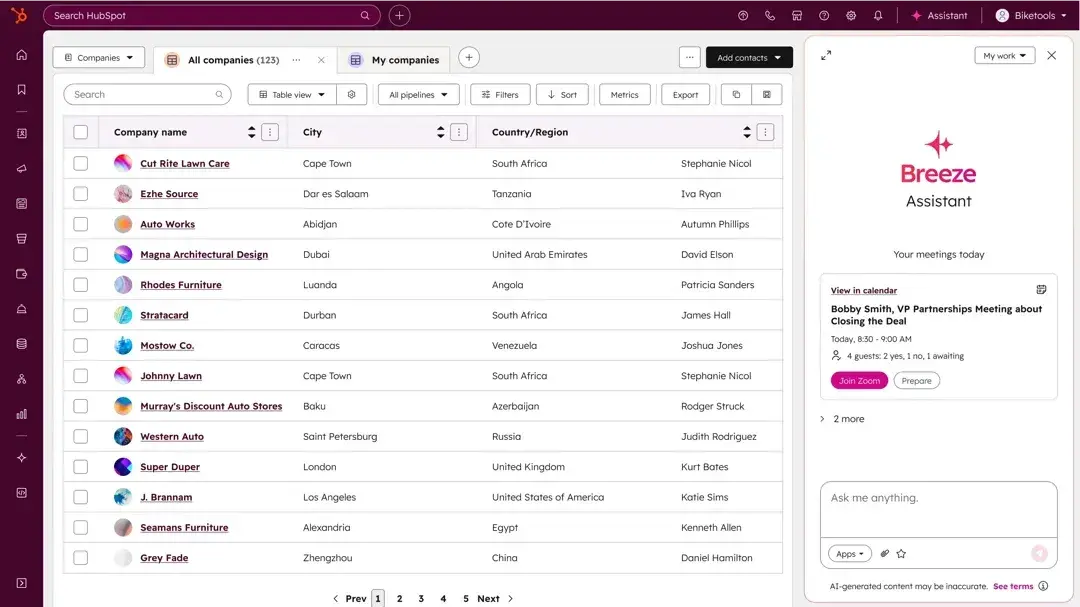
Breeze is HubSpot’s AI agent that generates content, analyzes performance, and supports forecasting scenarios. Breeze and Breeze Agents extend this capability across the entire campaign planning and execution process.
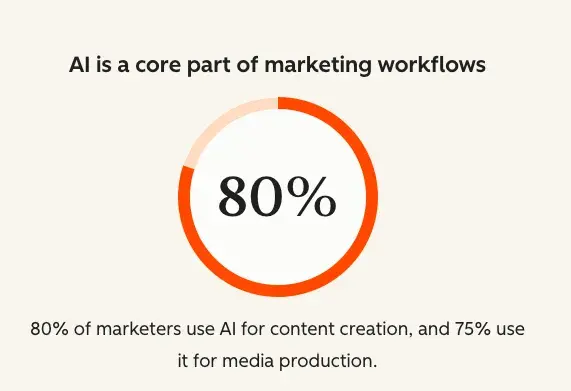
Forecasting models must adapt to faster execution cycles. According to HubSpot’s research, 61% of marketers report that AI is the most significant disruption in the past two decades, and 80% now use AI in marketing workflows. Faster execution requires faster updates to forecast models.
Breeze contributes in three ways:
- Generates content for campaigns and web experiences.
- Supports forecasting inputs through data analysis and scenario modeling.
- Accelerates iteration by reducing manual effort.
Breeze connects content generation with performance insights, allowing projections to evolve alongside real-time data.
Frequently Asked Questions About Marketing Forecasts
How often should you update a marketing forecast?
Marketing forecasts should be updated monthly or quarterly, depending on business velocity. Faster-moving environments benefit from more frequent updates because performance inputs such as conversion rates and channel efficiency change quickly. Regular updates improve accuracy by aligning projections with current data and market conditions.
What is the best way to forecast with limited data?
Scenario-based forecasting combined with benchmark data provides a practical starting point. Early models rely on assumptions drawn from similar products or channels, which should be refined as performance data becomes available.
How can marketers predict the impact of changes?
Scenario modeling allows teams to adjust variables such as conversion rates, spend, or channel mix and estimate potential outcomes. This approach helps evaluate trade-offs before changes are implemented.
When should you switch forecasting methods?
Teams should shift forecasting methods as data maturity increases or when current models no longer accurately reflect performance. More advanced methods become valuable as datasets grow and relationships between variables become clearer.
What makes a marketing forecast effective?
An effective marketing forecast links data, strategy, and execution into a continuous system that adapts over time. Forecast reliability depends on consistent inputs, unified systems, and regular validation against actual performance. Clear assumptions and structured models reduce uncertainty and strengthen planning decisions.
HubSpot Smart CRM centralizes data, HubSpot marketing automation translates projections into execution, and Breeze applies intelligence across forecasting workflows. These systems allow marketing forecasts to evolve from static projections into dynamic models that reflect real performance.
Forecast models become more useful when treated as active systems rather than fixed plans. Regular updates, consistent definitions, and aligned data create more stable projections and more predictable growth.

