President Donald Trump on Friday signed a promised executive action to pay Transportation Security Administration employees after a bid to end the shutdown of the Department of Homeland Security abruptly fell apart in Congress.Trump signed the action with an eye toward easing long security lines at many of the nation’s top airports.“America’s air travel system has reached its breaking point,” Trump said in the memo authorizing the payments. He added, “I have determined that these circumstances constitute an emergency situation compromising the Nation’s security.”Trump said his administration would use “funds that have a reasonable and logical nexus to TSA operations” for the payments. In a statement Friday, Homeland Security Secretary Markwayne Mullin said TSA workers “should begin seeing paychecks as early as Monday.”While Trump’s action could help ease the plight of air travelers, it does little to resolve the DHS shutdown that has jammed airports and imposed financial hardship on thousands of federal workers. The House and Senate ended the week by passing vastly different bills, creating a new impasse as lawmakers leave Washington for a two-week recess.The shutdown of Homeland Security will reach 44 days on Sunday, eclipsing the record 43-day shutdown last fall that affected all of the federal government.House Republicans reject Senate deal The Senate passed a funding deal early Friday, but blowback from House Republicans came quickly. House Speaker Mike Johnson, upon opening the chamber for business, accused Democrats of playing a dangerous game and said he needed to talk with fellow Republicans about how to proceed.After a lengthy conference call, Johnson blasted the Senate’s action and announced that the House would be going in a different route. “This gambit that was done last night is a joke,” Johnson said.Instead, the House on Friday night passed a bill to fund the entire department through May 22. The vote was 213-203. Johnson said he had spoken with Trump about the House Republican plan and the president supported it.House Republicans were livid that the bill passed by the Senate does not fund Immigration and Customs Enforcement and Border Patrol. Democrats refused to fund those departments without changes to immigration enforcement practices.”We’re going to do something different,” Johnson said. He challenged the Senate to take up the House’s short-term fix to fund Homeland Security into May.But senators left town after voting to fund most of DHS, so it would take time for them to return once the House passes a different measure. And even if they were to return, Senate Democratic leader Chuck Schumer made clear the House GOP plan would be “dead on arrival in the Senate, and Republicans know it.”House Democratic leader Hakeem Jeffries said the Senate-passed bill would clear the House with Republican and Democratic votes if Johnson would allow it to be voted on.“This could end, and should end, today,” Jeffries said.The Republican leadership riftThe rejection of the Senate deal creates a noticeable rift between Johnson and Senate Majority Leader John Thune, R-S.D., who have mostly worked in tandem this Congress trying to enact Trump’s agenda.With all Democrats opposed, Thune had to find a solution to the funding impasse that would win the 60 votes needed to break a filibuster in the 53-47 Senate.After more than a week of intense negotiations — some involving the White House — the two sides agreed early Friday to fund most parts of the Homeland Security Department except for ICE and parts of CBP. It passed by voice vote with no objections from either side just after 2 a.m.Asked if he had cleared the compromise with Johnson, Thune said the two had texted.“I don’t know what the House will do,” Thune said.The White House was silent as senators reviewed the compromise, and Trump did not weigh in publicly.The next day, as the deal fell apart in the House, Thune did not respond to Johnson’s comments that he was left in the dark.The speaker, asked about a rift with Thune, said Democrats in the Senate were to blame for the situation. Airport lines grow as TSA workers endure hardships The DHS shutdown has resulted in travel delays and even warnings of airport closures as more TSA workers missing paychecks stopped going to work. Those workers had already endured the nation’s longest government shutdown last fall.Multiple airports have been experiencing greater than 40% callout rates of TSA workers, and nearly 500 of the agency’s nearly 50,000 transportation security officers have quit during the shutdown. Nationwide on Thursday, more than 11.8% of the TSA employees on the schedule missed work, according to DHS. That is more than 3,450 callouts.___Associated Press writers Rebecca Santana, Collin Binkley, Mary Clare Jalonick and Ben Finley in Washington, Lekan Oyekanmi in Houston, Wyatte Grantham-Philips in New York, Rio Yamat in Las Vegas, Russ Bynum in Savannah, Georgia, and Gabriela Aoun Angueira in San Diego contributed to this report.
President Donald Trump on Friday signed a promised executive action to pay Transportation Security Administration employees after a bid to end the shutdown of the Department of Homeland Security abruptly fell apart in Congress.
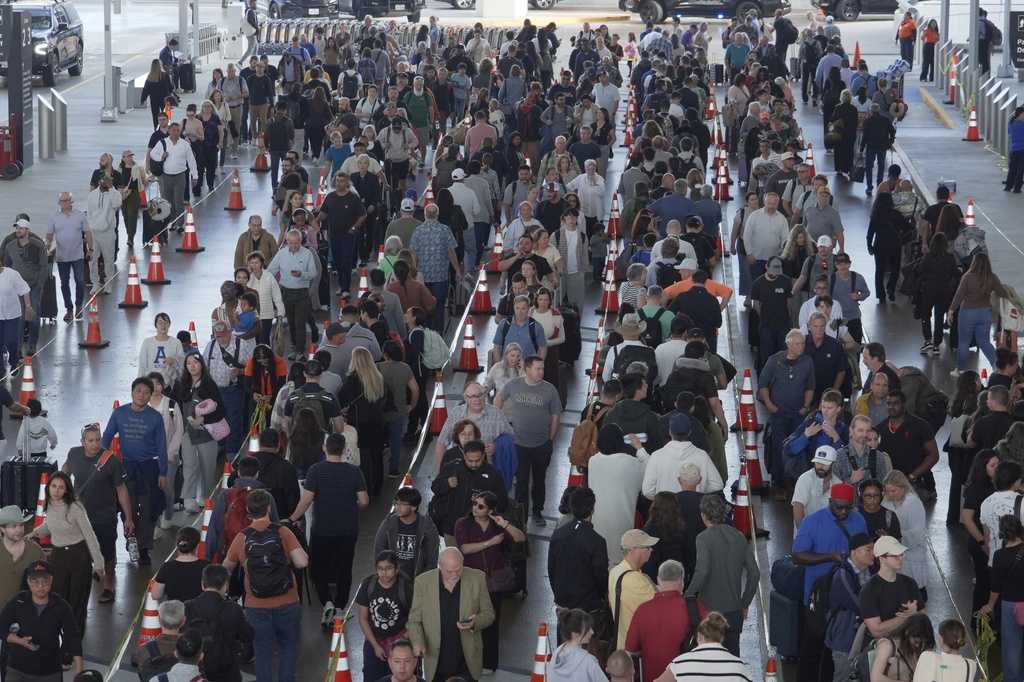
Trump signed the action with an eye toward easing long security lines at many of the nation’s top airports.
“America’s air travel system has reached its breaking point,” Trump said in the memo authorizing the payments. He added, “I have determined that these circumstances constitute an emergency situation compromising the Nation’s security.”
Trump said his administration would use “funds that have a reasonable and logical nexus to TSA operations” for the payments. In a statement Friday, Homeland Security Secretary Markwayne Mullin said TSA workers “should begin seeing paychecks as early as Monday.”
While Trump’s action could help ease the plight of air travelers, it does little to resolve the DHS shutdown that has jammed airports and imposed financial hardship on thousands of federal workers.
The House and Senate ended the week by passing vastly different bills, creating a new impasse as lawmakers leave Washington for a two-week recess.
The shutdown of Homeland Security will reach 44 days on Sunday, eclipsing the record 43-day shutdown last fall that affected all of the federal government.
House Republicans reject Senate deal
The Senate passed a funding deal early Friday, but blowback from House Republicans came quickly. House Speaker Mike Johnson, upon opening the chamber for business, accused Democrats of playing a dangerous game and said he needed to talk with fellow Republicans about how to proceed.
After a lengthy conference call, Johnson blasted the Senate’s action and announced that the House would be going in a different route. “This gambit that was done last night is a joke,” Johnson said.
Instead, the House on Friday night passed a bill to fund the entire department through May 22. The vote was 213-203. Johnson said he had spoken with Trump about the House Republican plan and the president supported it.
House Republicans were livid that the bill passed by the Senate does not fund Immigration and Customs Enforcement and Border Patrol. Democrats refused to fund those departments without changes to immigration enforcement practices.
“We’re going to do something different,” Johnson said. He challenged the Senate to take up the House’s short-term fix to fund Homeland Security into May.
But senators left town after voting to fund most of DHS, so it would take time for them to return once the House passes a different measure. And even if they were to return, Senate Democratic leader Chuck Schumer made clear the House GOP plan would be “dead on arrival in the Senate, and Republicans know it.”
House Democratic leader Hakeem Jeffries said the Senate-passed bill would clear the House with Republican and Democratic votes if Johnson would allow it to be voted on.
“This could end, and should end, today,” Jeffries said.
The Republican leadership rift
The rejection of the Senate deal creates a noticeable rift between Johnson and Senate Majority Leader John Thune, R-S.D., who have mostly worked in tandem this Congress trying to enact Trump’s agenda.
With all Democrats opposed, Thune had to find a solution to the funding impasse that would win the 60 votes needed to break a filibuster in the 53-47 Senate.
After more than a week of intense negotiations — some involving the White House — the two sides agreed early Friday to fund most parts of the Homeland Security Department except for ICE and parts of CBP. It passed by voice vote with no objections from either side just after 2 a.m.
Asked if he had cleared the compromise with Johnson, Thune said the two had texted.
“I don’t know what the House will do,” Thune said.
The White House was silent as senators reviewed the compromise, and Trump did not weigh in publicly.
The next day, as the deal fell apart in the House, Thune did not respond to Johnson’s comments that he was left in the dark.
The speaker, asked about a rift with Thune, said Democrats in the Senate were to blame for the situation.
Airport lines grow as TSA workers endure hardships
The DHS shutdown has resulted in travel delays and even warnings of airport closures as more TSA workers missing paychecks stopped going to work. Those workers had already endured the nation’s longest government shutdown last fall.
Multiple airports have been experiencing greater than 40% callout rates of TSA workers, and nearly 500 of the agency’s nearly 50,000 transportation security officers have quit during the shutdown. Nationwide on Thursday, more than 11.8% of the TSA employees on the schedule missed work, according to DHS. That is more than 3,450 callouts.
___
Associated Press writers Rebecca Santana, Collin Binkley, Mary Clare Jalonick and Ben Finley in Washington, Lekan Oyekanmi in Houston, Wyatte Grantham-Philips in New York, Rio Yamat in Las Vegas, Russ Bynum in Savannah, Georgia, and Gabriela Aoun Angueira in San Diego contributed to this report.

