St. Patrick’s Day is just around the corner, and that means plenty of green, plenty of drinking, and plenty of drinking green drinks. The most popular green drink is the simplest of them all: green beer. For many pub-crawling partygoers, a shining emerald green pint is the perfect way to celebrate one of the most rambunctious holidays of the year, but after a few—or after seeing a few come back up—you may find yourself wondering, Is it safe to drink green beer? I asked the experts, and this is what they had to say.What’s In Green Beer?Rather than some grand concoction, green beer is a simple combination of green food coloring and beer—usually, but not always, a light lager. All it takes is a few drops of food coloring to give a whole pitcher a green hue, and it has no discernible taste, so many bars see it as a quick, simple way to bring extra festive flair to St. Paddy’s. Where things get interesting is in the green food coloring itself.According to Emma Zheng, co-founder, nutritionist & HR expert at Summit Breeze Tea, “Green food coloring is created by combining two artificial dyes: Brilliant Blue (Blue No. 1) and Tartrazine (Yellow No. 5),” which are “synthetic and created in a laboratory.” While approved for commercial use, these two dyes, along with six others—including Green No. 3, the other green dye sometimes used in green beer—have been at the center of the push by the current leadership at the U.S. Department of Health and Human Services (HHS) and U.S. Food and Drug Administration (FDA) to eliminate the use of synthetic food dyes, due to concerns over the presence of petroleum-based chemicals.While generally speaking, these food dyes approved by the FDA aren’t harmful in small quantities, some people are especially sensitive to them, and Tartrazine has one of the worst reputations. For those sensitive to Tartrazine, Zheng says consuming green beer that contains the dye could cause headaches, stomach irritation, and even histamine reactions like itching and hives.Really, though, the issue comes down to the amount of green beer that you’re drinking. Emmy Clinton, founder, chef, and recipe developer at Entirely Emmy, says, “If consumed in small amounts (the amount of food dye in 1 drink), it’s unlikely to cause any serious harm in most adults,” but for many, the fun doesn’t stop after one drink. “Realistically, the larger concern is over the consumption of alcohol, but the artificial dyes can add more stress to the body,” she says.Are There Any Alternatives?If you’re looking to avoid synthetic food dyes but still want to enjoy a festive green beer, there are plenty of options for you. Both Zheng and Clinton offered matcha, spirulina, and wheatgrass as healthy alternatives, with Clinton also suggesting “fresh mint or juice from parsley to get vibrant greens.” Each of these alternatives is a great option for providing green coloring, though they will bring with them additional flavoring that green food coloring will not; however, in a darker beer, they can still provide green coloring with matcha, spirulina, and wheatgrass, having mild enough flavors that they shouldn’t be noticeable.So Should You Drink Green Beer?While there are some risks associated with over-consumption of green food dyes, they are approved for human consumption, and generally speaking you shouldn’t notice any adverse affects—though you may find yourself with a green mouth. Where you’ll start to notice any adverse effects (especially if you’re tartrazine-sensitive) comes within the territory of over-drinking, so try to stick to only a few green beers, and be sure to drink plenty of water as well.
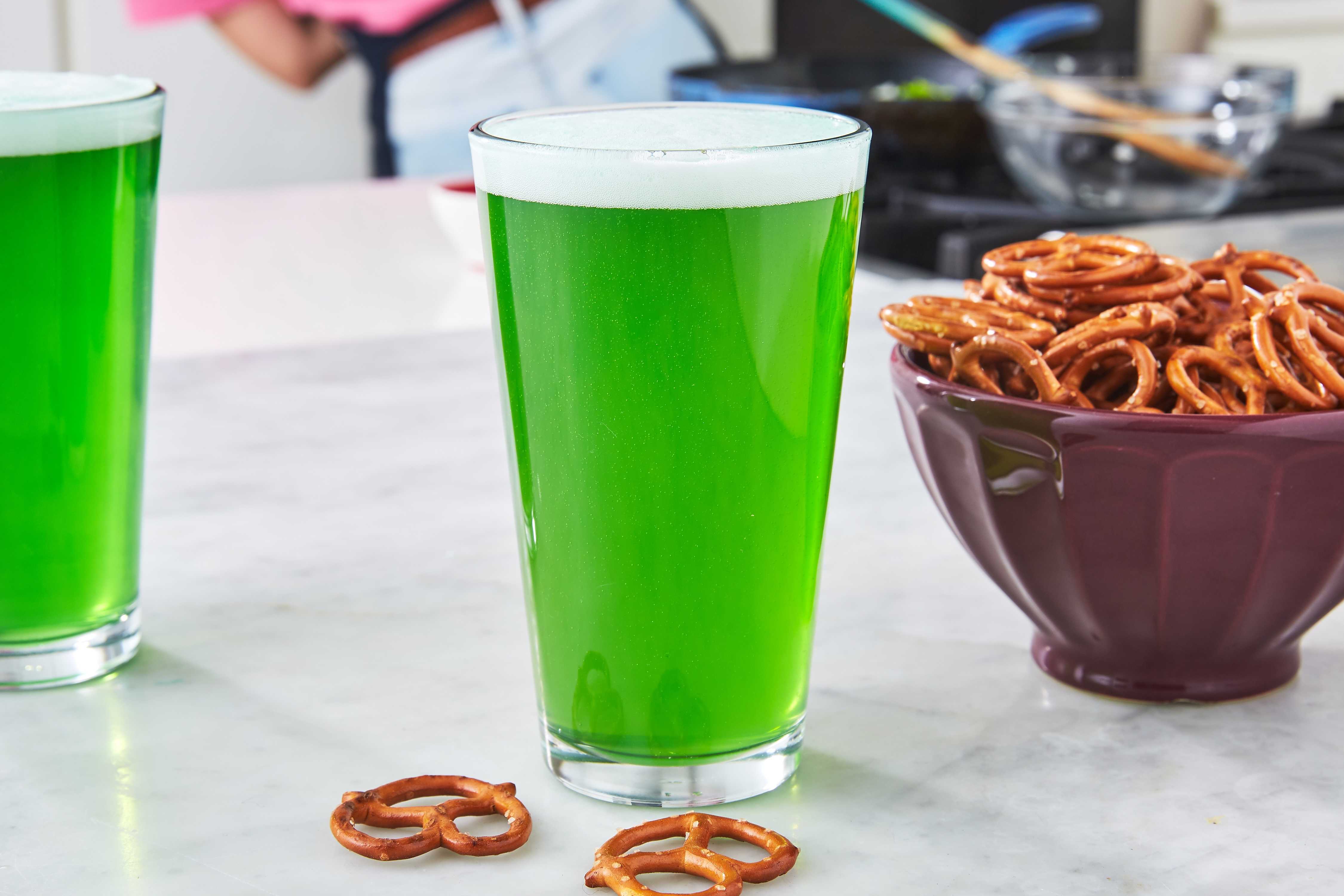
St. Patrick’s Day is just around the corner, and that means plenty of green, plenty of drinking, and plenty of drinking green drinks. The most popular green drink is the simplest of them all: green beer. For many pub-crawling partygoers, a shining emerald green pint is the perfect way to celebrate one of the most rambunctious holidays of the year, but after a few—or after seeing a few come back up—you may find yourself wondering, Is it safe to drink green beer? I asked the experts, and this is what they had to say.
What’s In Green Beer?
Rather than some grand concoction, green beer is a simple combination of green food coloring and beer—usually, but not always, a light lager. All it takes is a few drops of food coloring to give a whole pitcher a green hue, and it has no discernible taste, so many bars see it as a quick, simple way to bring extra festive flair to St. Paddy’s. Where things get interesting is in the green food coloring itself.
According to Emma Zheng, co-founder, nutritionist & HR expert at Summit Breeze Tea, “Green food coloring is created by combining two artificial dyes: Brilliant Blue (Blue No. 1) and Tartrazine (Yellow No. 5),” which are “synthetic and created in a laboratory.” While approved for commercial use, these two dyes, along with six others—including Green No. 3, the other green dye sometimes used in green beer—have been at the center of the push by the current leadership at the U.S. Department of Health and Human Services (HHS) and U.S. Food and Drug Administration (FDA) to eliminate the use of synthetic food dyes, due to concerns over the presence of petroleum-based chemicals.
While generally speaking, these food dyes approved by the FDA aren’t harmful in small quantities, some people are especially sensitive to them, and Tartrazine has one of the worst reputations. For those sensitive to Tartrazine, Zheng says consuming green beer that contains the dye could cause headaches, stomach irritation, and even histamine reactions like itching and hives.
Really, though, the issue comes down to the amount of green beer that you’re drinking. Emmy Clinton, founder, chef, and recipe developer at Entirely Emmy, says, “If consumed in small amounts (the amount of food dye in 1 drink), it’s unlikely to cause any serious harm in most adults,” but for many, the fun doesn’t stop after one drink. “Realistically, the larger concern is over the consumption of alcohol, but the artificial dyes can add more stress to the body,” she says.
Are There Any Alternatives?
If you’re looking to avoid synthetic food dyes but still want to enjoy a festive green beer, there are plenty of options for you. Both Zheng and Clinton offered matcha, spirulina, and wheatgrass as healthy alternatives, with Clinton also suggesting “fresh mint or juice from parsley to get vibrant greens.”
Each of these alternatives is a great option for providing green coloring, though they will bring with them additional flavoring that green food coloring will not; however, in a darker beer, they can still provide green coloring with matcha, spirulina, and wheatgrass, having mild enough flavors that they shouldn’t be noticeable.
So Should You Drink Green Beer?
While there are some risks associated with over-consumption of green food dyes, they are approved for human consumption, and generally speaking you shouldn’t notice any adverse affects—though you may find yourself with a green mouth. Where you’ll start to notice any adverse effects (especially if you’re tartrazine-sensitive) comes within the territory of over-drinking, so try to stick to only a few green beers, and be sure to drink plenty of water as well.

