Jurors heard Meta CEO Mark Zuckerberg’s deposition for the first time as the State of New Mexico’s case against Meta continued in court.The state alleges Meta’s platforms allow harmful content and sexual exploitation to persist, putting children at risk. At the center of the case is whether Meta knowingly allowed dangerous conditions to continue on its platforms and how much responsibility the company bears in protecting children.During a deposition played for the jury, Zuckerberg was asked whether child safety is important to him and the company. He responded, “Yes, of course.”When asked by prosecutors, “Do you believe that Meta bears any responsibility for these horrific crimes?” Zuckerberg said, “I think that our responsibility is to develop tools that can help identify people like this and prevent these things from happening.”Zuckerberg described those responsible for harmful activity as “adversarial actors who are looking at ways to skirt our systems,” adding, “We will continue to try to improve them, to do the best that we possibly can.”He also addressed the limits of software systems, saying, “I don’t think that the standard for our platforms would be that you should assume that it will never be perfect.”Testimony focused in part on Meta’s use of end-to-end encryption. “Encryption basically makes it so that Meta does not see people’s messages directly,” Zuckerberg said. He noted that the only way Meta can access those messages is if a user reports them.Prosecutors asked, “Meta should work as hard as it can, but not at the expense of encrypted messages. Right?”Zuckerberg responded that privacy and safety must be balanced. “Our job is to build products that balance these things in appropriate ways. Safety is obviously extremely important. People also care a lot about privacy and security, too,” he said. “I just think if you’re serving billions of people, the unfortunate reality is that some very small percent of them are going to be criminals, and we should work as hard as we can to stop that activity from happening.”The deposition of Meta’s president of global policy, Nick Clegg, was also played for the jury. Clegg said harmful content is bad for business.”If you’re placing ads for cars, for soap powder, for toys, for clothing, it’s just obvious that you don’t want your ad anywhere near content which could be hateful, unpleasant, still less cause real-world harm,” Clegg said.Zuckerberg also said in his deposition that Meta invests billions of dollars each year into safety efforts, with thousands of employees focused on enforcement, though not all are dedicated specifically to protecting young users.
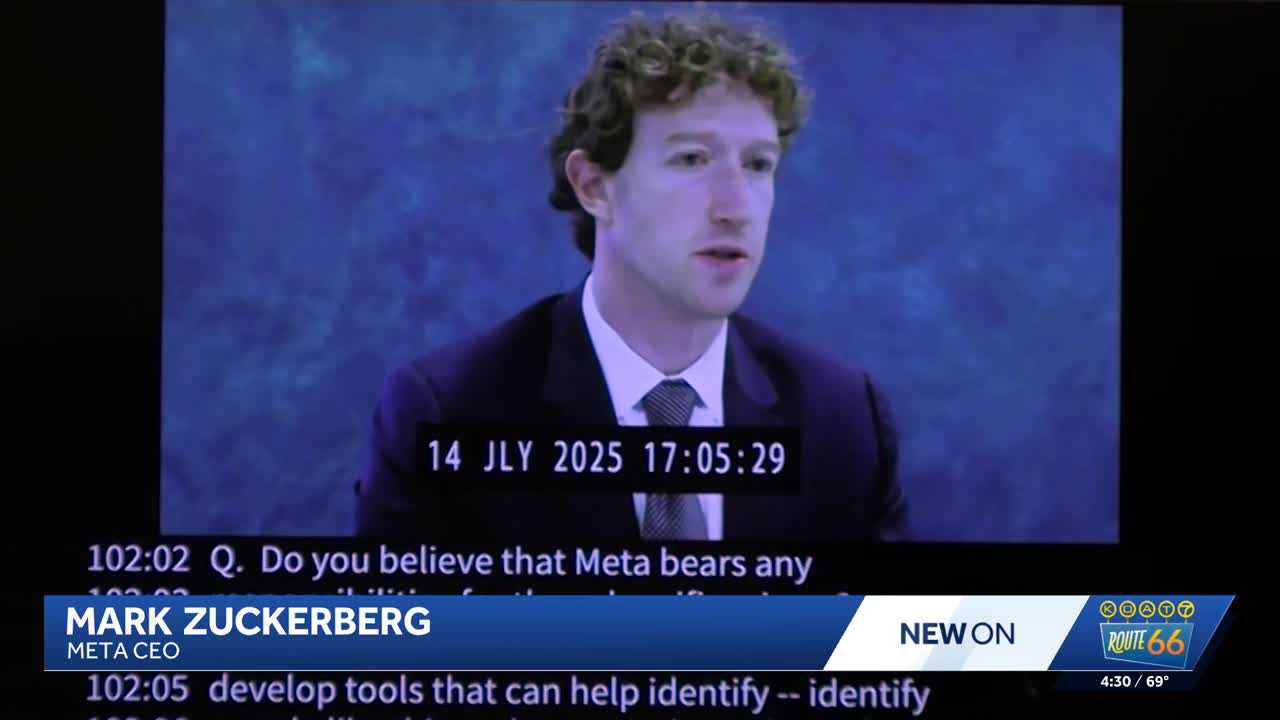
Jurors heard Meta CEO Mark Zuckerberg’s deposition for the first time as the State of New Mexico’s case against Meta continued in court.
The state alleges Meta’s platforms allow harmful content and sexual exploitation to persist, putting children at risk. At the center of the case is whether Meta knowingly allowed dangerous conditions to continue on its platforms and how much responsibility the company bears in protecting children.
During a deposition played for the jury, Zuckerberg was asked whether child safety is important to him and the company. He responded, “Yes, of course.”
When asked by prosecutors, “Do you believe that Meta bears any responsibility for these horrific crimes?” Zuckerberg said, “I think that our responsibility is to develop tools that can help identify people like this and prevent these things from happening.”
Zuckerberg described those responsible for harmful activity as “adversarial actors who are looking at ways to skirt our systems,” adding, “We will continue to try to improve them, to do the best that we possibly can.”
He also addressed the limits of software systems, saying, “I don’t think that the standard for our platforms would be that you should assume that it will never be perfect.”
Testimony focused in part on Meta’s use of end-to-end encryption. “Encryption basically makes it so that Meta does not see people’s messages directly,” Zuckerberg said. He noted that the only way Meta can access those messages is if a user reports them.
Prosecutors asked, “Meta should work as hard as it can, but not at the expense of encrypted messages. Right?”
Zuckerberg responded that privacy and safety must be balanced. “Our job is to build products that balance these things in appropriate ways. Safety is obviously extremely important. People also care a lot about privacy and security, too,” he said. “I just think if you’re serving billions of people, the unfortunate reality is that some very small percent of them are going to be criminals, and we should work as hard as we can to stop that activity from happening.”
The deposition of Meta’s president of global policy, Nick Clegg, was also played for the jury. Clegg said harmful content is bad for business.
“If you’re placing ads for cars, for soap powder, for toys, for clothing, it’s just obvious that you don’t want your ad anywhere near content which could be hateful, unpleasant, still less cause real-world harm,” Clegg said.
Zuckerberg also said in his deposition that Meta invests billions of dollars each year into safety efforts, with thousands of employees focused on enforcement, though not all are dedicated specifically to protecting young users.

