NASA on Friday announced an abrupt change to its pathway to getting astronauts back on the lunar surface, opting to add in an additional crewed test flight before attempting to land.Artemis III will launch in mid-2027, will rendezvous with HLS landers but no lunar landing.Artemis IV will attempt to land on the moon in 2028Artemis II is now without a crewWatch live coverage in the video player above from sister station WESH in Orlando, Florida.Space agency officials said that “Artemis III” — the mission name that had previously been used to refer to a moon landing slated to happen no earlier than 2028 — will now be a different mission entirely, one that involves launching a crewed NASA capsule to Earth orbit to dock with at least one prototype lunar lander vehicle made by SpaceX or Blue Origin. NASA Administrator Jared Isaacman said he hopes the mission will get off the ground in 2027.The moon landing mission, still slated for 2028, will now be referred to as “Artemis IV.” Isaacman said the agency is in fact pursuing up to two moon landings in 2028.Oversight officials, however, have already cast serious doubt on whether the timeline is obtainable.Isaacman billed the decision as an effort to increase the pace at which NASA launches Artemis-related missions. For context, the first uncrewed test flight of the program, called Artemis I, launched in November 2022 — putting more than three years between that test flight and the Artemis II mission, the first crewed Artemis flight test slated to carry four astronauts on a slingshot trip around the moon.“We didn’t go right to Apollo 11,” Isaacman said. “We had a whole Mercury Program, Gemini — lots of Apollo missions before we ultimately landed right. Now, our program is essentially set up with an Apollo 8 and then going right to the moon. That is, again, not a pathway to success.”The news comes as NASA continues to work to get Artemis II off the ground. That mission, which involves sending four astronauts on a test flight that will loop around the moon but will not land on its surface, was originally targeting launch windows in February.But those plans were dashed because of issues with NASA’s Space Launch System rocket. Specifically, a series of hydrogen leaks and then an unexpected problem getting helium to flow to the upper portion of the launch vehicle led to a series of delays and ultimately a decision to roll the rocket back off its launchpad.Artemis II — which will make use of NASA’s Space Launch System rocket and Orion spacecraft but will not involve a lunar lander vehicle — is now expected to launch no earlier than April.CNN contributed to this report.
NASA on Friday announced an abrupt change to its pathway to getting astronauts back on the lunar surface, opting to add in an additional crewed test flight before attempting to land.
- Artemis III will launch in mid-2027, will rendezvous with HLS landers but no lunar landing.
- Artemis IV will attempt to land on the moon in 2028
- Artemis II is now without a crew
Watch live coverage in the video player above from sister station WESH in Orlando, Florida.
Space agency officials said that “Artemis III” — the mission name that had previously been used to refer to a moon landing slated to happen no earlier than 2028 — will now be a different mission entirely, one that involves launching a crewed NASA capsule to Earth orbit to dock with at least one prototype lunar lander vehicle made by SpaceX or Blue Origin. NASA Administrator Jared Isaacman said he hopes the mission will get off the ground in 2027.
The moon landing mission, still slated for 2028, will now be referred to as “Artemis IV.” Isaacman said the agency is in fact pursuing up to two moon landings in 2028.
Oversight officials, however, have already cast serious doubt on whether the timeline is obtainable.
Isaacman billed the decision as an effort to increase the pace at which NASA launches Artemis-related missions. For context, the first uncrewed test flight of the program, called Artemis I, launched in November 2022 — putting more than three years between that test flight and the Artemis II mission, the first crewed Artemis flight test slated to carry four astronauts on a slingshot trip around the moon.
“We didn’t go right to Apollo 11,” Isaacman said. “We had a whole Mercury Program, Gemini — lots of Apollo missions before we ultimately landed right. Now, our program is essentially set up with an Apollo 8 and then going right to the moon. That is, again, not a pathway to success.”
The news comes as NASA continues to work to get Artemis II off the ground. That mission, which involves sending four astronauts on a test flight that will loop around the moon but will not land on its surface, was originally targeting launch windows in February.
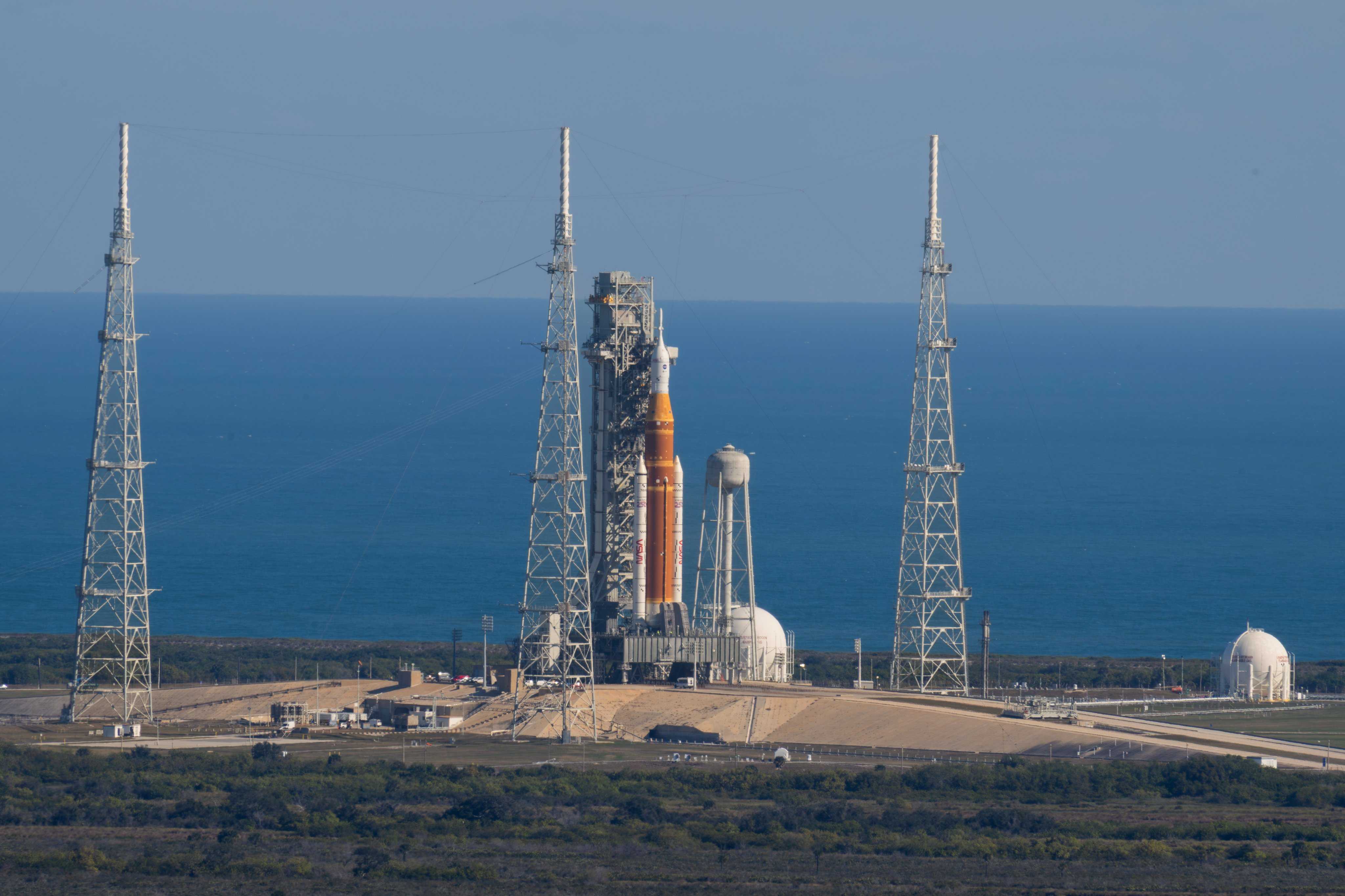
But those plans were dashed because of issues with NASA’s Space Launch System rocket. Specifically, a series of hydrogen leaks and then an unexpected problem getting helium to flow to the upper portion of the launch vehicle led to a series of delays and ultimately a decision to roll the rocket back off its launchpad.
Artemis II — which will make use of NASA’s Space Launch System rocket and Orion spacecraft but will not involve a lunar lander vehicle — is now expected to launch no earlier than April.
CNN contributed to this report.

