18 interesting facts about the Olympics through the years

Date:


18 interesting facts about the Olympics through the years

Just imagine winning gold in your first games and becoming the first black woman to win an individual gold in the Winter Games, and now here Milan carrying the stars and stripes for your country. That’s Aaron Jackson, one of the fastest on ice, forced to, well, chill and slowly take in some big news. I knew that I was kind of in *** list of maybe 7 or so people. Um, I didn’t know what my chances were. Because there were *** lot of really heavy hitters and really worthy people to carry the flag. Among her peers, she’s proven her worth, so much so they voted for her to be the standard bearer. The moment when I found out I was actually at practice with my team, which was really cool. So our coach kind of sat us down on the edge of the ice and announced it to the team, and it was just *** really cool moment. Jackson won 500 m long track gold. In 2022, an inline skater turned ice speedster. Being up on *** podium isn’t new to her, but perhaps being the face of her country is. Just walking out into the opening ceremonies, like even without carrying the flag, it’s this amazing feeling of like, OK, we’re here, we’re at the Olympics, we’re surrounded by all these amazing people who have worked so hard to get to this point, and I think carrying the flag is just going to add to that, and I’m really looking forward to it.

The 2026 Winter Olympics are finally here, with the opening ceremonies kicking off Feb. 9. But the Olympics have been making history for centuries. From the Games’ Greek origins to their first foray into Asia, the Olympics are known for bringing nations from all around the world together to celebrate the very best in athletics.

The Olympics have changed a lot over the years, from the events included in the official program to the athletes eligible to compete. These 18 facts shed some light on the history of the Olympic Games and will deepen your appreciation if you like to tune in every couple of years.

1

The Olympics used to take place over six months.

First celebrated in Greece in 776 BC, the Olympic Games originally spanned a hefty six months. Some of the events included in the earliest Olympics include discus, chariot racing and wrestling.

2

Women couldn’t always compete.

Women have been allowed to compete in the Olympics since 1900, though many events did not permit women to compete until several years later.

3

The Olympics were banned for over a thousand years.

The Olympics were banned by the Romans in 396 AD, as they considered the competition a pagan ritual that was in direct conflict with Christianity. They were not held again for another 1,500 years until the modern Olympic games began in Athens in 1896.

4

Olympic sports have changed quite a bit.

Many sports, like hot air ballooning, rope climbing and tug of war, were once part of the competition in the Olympics but have since been removed from the program.

5

It wasn’t always a worldwide event.

Only 14 countries participated in the first Summer Olympics in 1896, though over 200 compete today.

6

Artists used to compete in the Olympics.

Between 1921 and 1948, musicians, artists and architects, among other creatives, competed in the Olympic Games by making works of art. These pieces typically included athletes and Olympic sports as their subjects.

7

There’s less gold in gold medals than you think.

Gold medals are not made from solid gold. Modern Olympic gold medals are gold-plated and primarily made of silver; solid gold medals stopped being produced in 1912.

8

Only one country has won medals from every Winter Olympics.

The United States is the only country to have earned a medal at every Olympic Winter Games.

9

Some countries excel at the Winter Olympics over the Summer Olympics.

Despite winning medals at the Winter Olympics, Liechtenstein has never won a medal at the Summer Olympics. On the other hand, plenty of countries compete in the Summer Games but don’t have enough winter sports athletes to compete in the Winter Games.

10

South America did not host the Olympic Games until 2016.

The Olympics were held in South America for the first time in 2016 in Rio de Janeiro, Brazil. Women’s rugby made its Olympic debut, and golf and men’s rugby returned to the Olympic program after a century-long hiatus.

11

The 1900 Olympic Games were small and long by today’s standards.

The 1900 Olympic Games were held in Paris, France, as part of the World’s Fair in Paris. The games spanned five months, and only 24 countries were in competition at that time.

12

Asia was not represented at the Olympics until 1912.

Japan was the first Asian country to participate in the Olympic Games when it competed for the first time in the 1912 Summer Games, held in Stockholm, Sweden.

13

Only five countries have competed in every Olympic Summer Games.

Only five countries — Greece, Switzerland, Great Britain, Australia, and France — have competed in every Olympic Summer Games.

14

Figure skating was once part of the Summer Olympics.

Despite taking place on ice, figure skating was included as part of the Summer Olympics. The Winter Olympics were not introduced until 1924, at which time figure skating was moved over.

15

The Olympic flag holds tremendous significance.

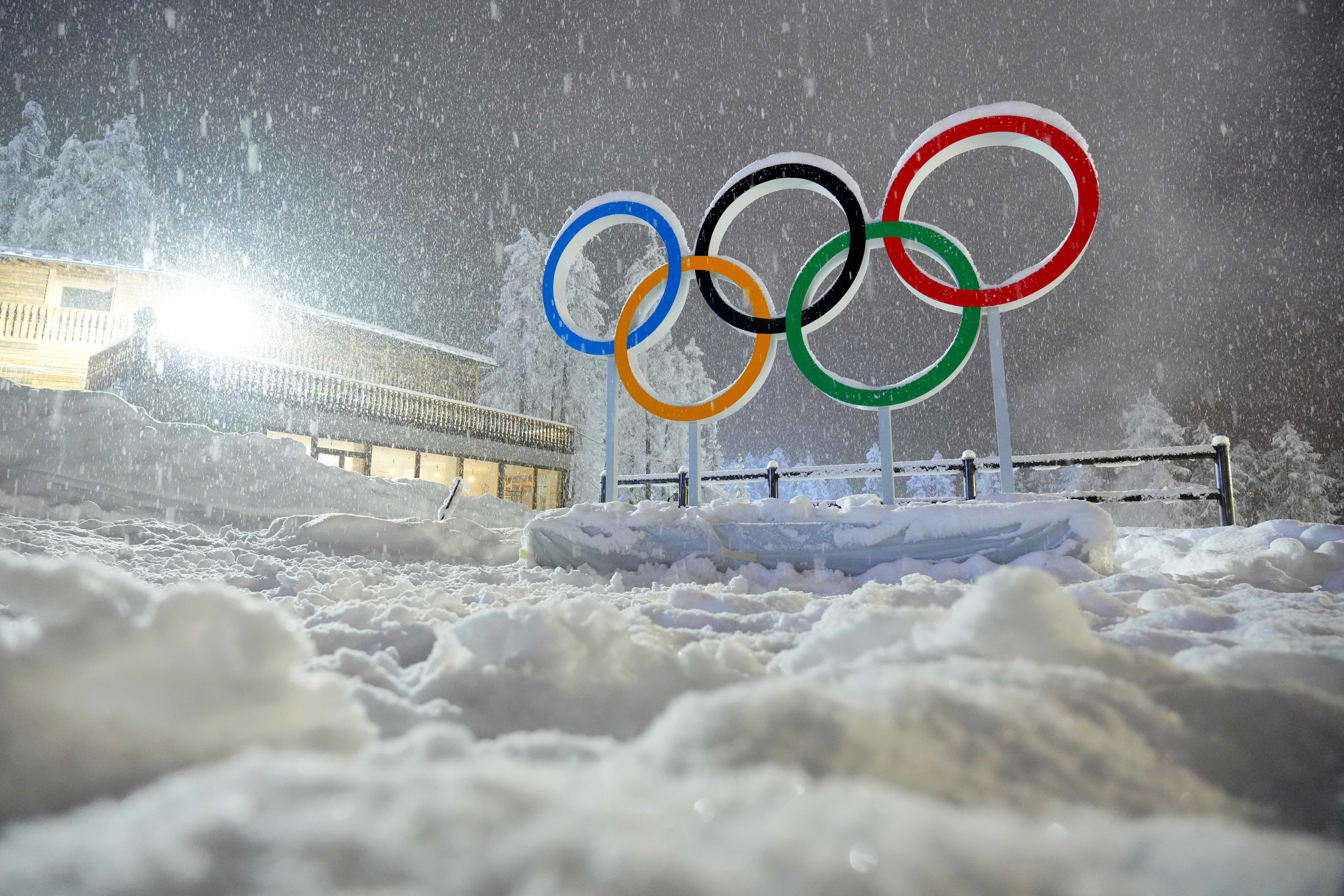
The five rings on the Olympic flag represent the world’s five inhabited continents, with North and South America (the Americas) considered as one. The ring’s colors are the most common colors on countries’ flags around the world.

16

The Olympics have official languages.

English and French are considered the official languages of the Olympic Games, as is the language of the country hosting the Games.

17

The Olympics are proud of its Greek heritage.

Fire is significant to Greek mythology, with Hestia being the Goddess of the Hearth. Sacred flames were often kept lit throughout the Ancient Games in temples like Olympia. The idea of lighting an Olympic Flame in a cauldron began at the Summer Olympics in Amsterdam.

18

The Torch Relay was invented in Nazi Germany

The tradition of moving the Olympic flame from country to country until it reaches the host nation seems much older, but it was conceived by German Olympian Carl Diem for the 1936 Summer Olympics in Berlin. The Nazis used the torch relay and subsequent games as propaganda, with filmmaker Leni Riefschtenstal creating the film “Olympia” after filming the events.


Source link

Share post:

Subscribe

spot_imgspot_img

Popular

More like this
Related

11,500 shootings near US schools in 2025, data shows

Not a day has gone by in the past...

Ex-PORCUPINE TREE Members Reunite As VOYAGE 35; Single & Tour Dates Announced

Thirty-three years ago, in 1993, Porcupine Tree stepped onto...

Stocks Decline and Brent Crude Pares Gains After Touching $119

U.S. stocks declined, putting them on track for a...